
The Cleaning Product I Didn't Know I Inherited
I'll admit it — I fall for a new label every single time. A soft sans-serif tub promising effortless everything, a bottle with a tagline that swears it's the last one I'll ever need to buy — I bring these things home with real hope every time. Then they sit half-used under the sink within a month, quietly demoted, while I go looking for whatever's promising the same thing in slightly better packaging.
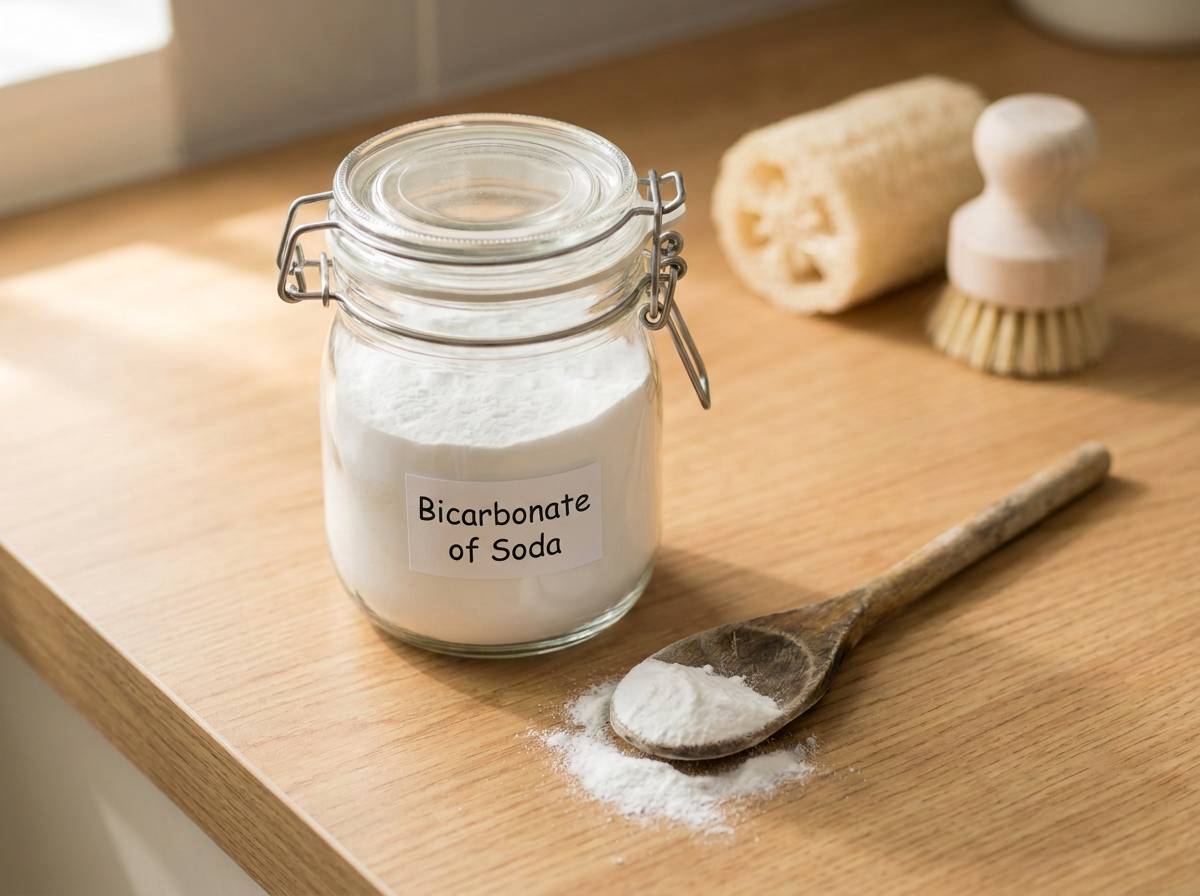
Somewhere in the last few years I got tired of my own optimism and did something almost embarrassingly unglamorous instead. It started with baking — the same box I've always kept for bread and cakes, the one that's been sitting in kitchen cupboards for generations. Slowly, almost without deciding to, I started reaching for it elsewhere in the house too. Months later, once it was clearly the only thing I kept reaching for, I finally bought the twenty-kilo tub and decanted it into smaller jars around the house — no taglines, no claims, just one ingredient, already trusted at the oven, doing the same three jobs everywhere else it's needed.
I mentioned it to my mother, half-expecting to be teaching her something new. She'd been buying the same tub for years, without ever once mentioning it. Neither of us had seen the other reaching for it, and neither of us had needed to — it turns out the least glamorous thing under the sink is sometimes the one that gets passed down without a word, simply because it's the one that was never worth replacing.
One Tub, Three Jobs
A 2023 peer-reviewed study in the journal Chemosphere found conventional cleaning products release, on average, more than five times as many hazardous airborne chemicals as fragrance-free alternatives — chlorine and ammonia-based cleaners among the worst offenders. Bicarbonate of soda carries none of that baggage: no hazard warnings, no fumes to air the room out afterwards, nothing but one plain ingredient doing what it's always done.
A scoop in the bottom, or dissolved and wiped round the lid. Bicarbonate of soda is mildly alkaline and neutralises the acidic compounds that cause most food and rubbish odours, converting them into odourless salts rather than covering them up — a mechanism confirmed in waste-odour control research and used by several municipal food-waste programmes.
Dissolved in warm water as a soak, or added alongside normal detergent in the wash. It softens hard water and lifts everyday dirt and mild staining, which is why it's long been used as a laundry booster — it won't bleach the way an oxygen-based product does, but it earns its place for the jobs that don't need one.
A scoop left to sit, then scrubbed — or paired with vinegar for a fizzing reaction that helps lift limescale. It's a gentle, non-scratch abrasive, food-grade and safe enough to have been used for cleaning since ancient Egypt.
A Note from Mrs H
One tub does what four different bottles never quite managed — kitchen, bathroom, laundry, bin, all covered. It's non-toxic and safe around children, though best avoided on delicate or polished surfaces.