
The Real Cost of Fake Food
Lab-grown meat, chocolate, dairy and fish are arriving whether we're ready for them or not. Some countries have already banned lab-grown meat outright. Here's what's actually going on.
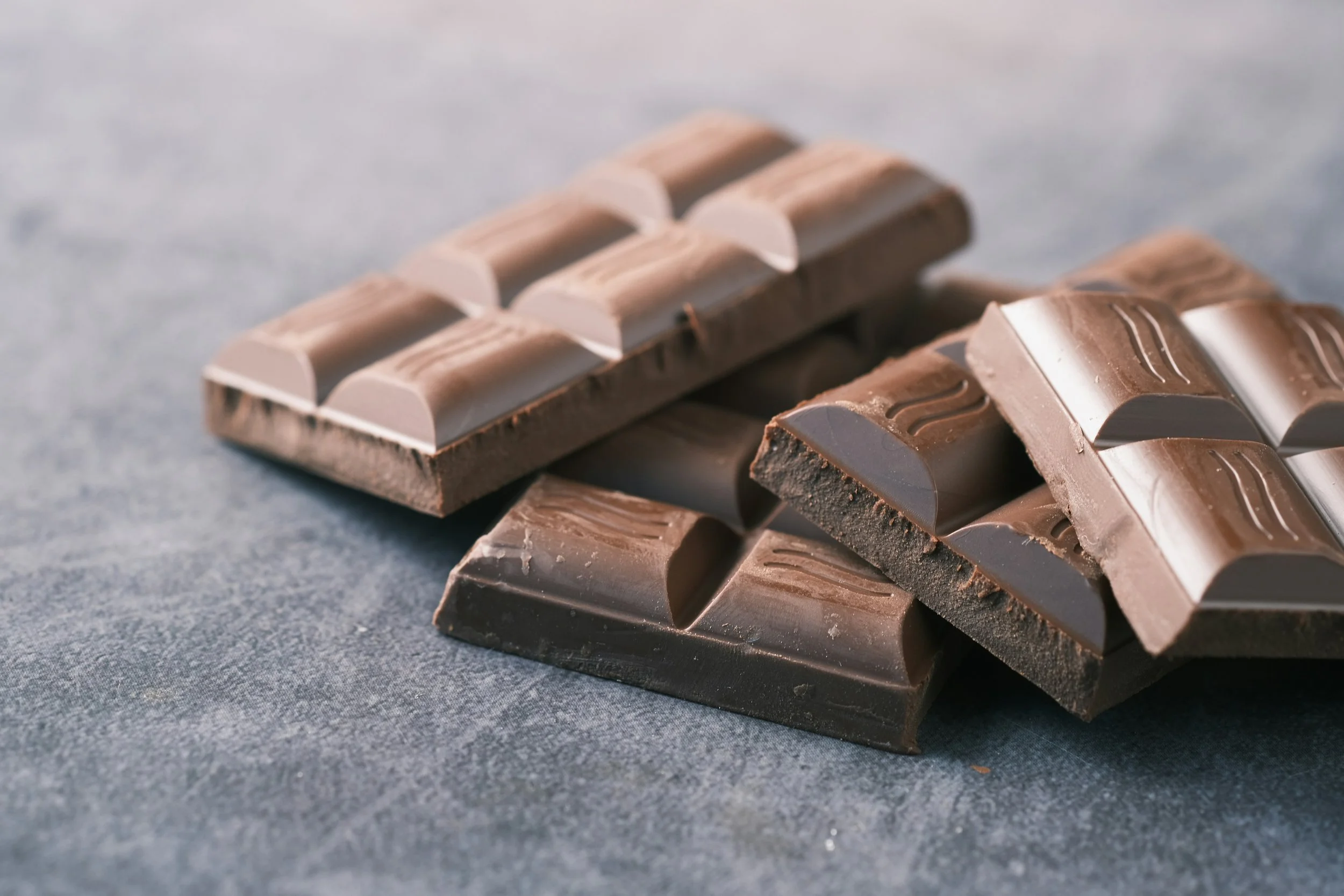
I noticed it before I could explain it. A square of Dairy Milk that used to snap clean now gives a little first, goes slightly waxy, leaves something oily behind. It turns out I wasn't imagining it. Cocoa prices have climbed so steeply that Mondelez has spent two years quietly adjusting the ratio of cocoa butter to palm oil, insisting the recipe hasn't fundamentally changed. McVitie's has gone further still, stripping the word “chocolate” off Penguin and Club altogether, because the coating no longer meets the legal 25% cocoa solids; even the Club slogan was rewritten, from “a lot of chocolate on your biscuit” to the rather sadder “a lot of biscuit in your break.”
That small discovery sent me down a much bigger rabbit hole. The same crisis behind my chocolate is now driving a very different kind of meat, dairy and fish onto supermarket shelves, and almost none of it will have been raised on a farm, kept in a herd, or caught at sea. Cadbury and McVitie's diluted the real thing. What's coming next isn't one thing at all: some of it starts as real cacao or animal cells, just multiplied in a tank rather than raised in the usual way; some of it is just built to taste like it.
What's here, and what's next
“Cultivated” meat takes cells from a living animal and multiplies them in a bioreactor until they form something resembling muscle — grown, not faked. Lab-grown chocolate works the same way: California Cultured and Celleste Bio grow cacao cells in fermentation tanks, and Mondelez's own ingredient supplier expects a commercial version on American shelves this year. A different, cocoa-free route is a true imitation rather than a replacement: Planet A Foods' ChoViva is made from oats, sunflower seeds and shea butter, no cacao cell involved at all, and it's already on shelves at Lidl and Aldi.
Behind these sits a longer queue. Perfect Day and Remilk are growing milk, whey and egg protein from engineered yeast, already in US and Israeli products. Wildtype and BlueNalu are cultivating salmon and bluefin tuna for restaurants. A handful of startups are fermenting honey without bees. Wherever a traditional food has become expensive, climate-vulnerable or ethically uncomfortable to produce, a biotech version is quietly being built to replace it.
Who's saying no
Not every country is waving this through, and that matters as much as the science does. Italy banned the production, sale and import of cultivated meat outright in 2023 — fines up to €60,000 — and went further, outlawing words like “steak” for plant-based products, calling it a defence of public health and culinary heritage. Hungary has since followed. Cultivated meat is currently approved for human consumption in only a handful of places worldwide: the US, Singapore, Israel and Australia. Several individual American states have banned it despite federal approval. The disagreement isn't really about the science. It's about who gets to decide what “real food” means.
The case for it
The argument in favour is a serious one. Up to half the world's cacao farmland may be unfit for production within a decade. Cattle farming drives deforestation and emissions at enormous scale. For parts of the world already short on land, water and protein, a lab-grown alternative isn't an indulgence — it's a genuine answer.
Where I've landed
I am against this — not the science itself, but the instinct to swallow it simply because it's been dressed up as progress. In the first world, where most of us already eat more meat, sugar and processed food than is good for us, this feels less like something we need, and more like something we want, dressed up as one.
The health picture isn't settled enough to wave it through either. Cultivated meat will almost certainly count as ultra-processed. Early products have tested lower in protein and amino acids, with vitamin B12, zinc and iron added back in deliberately rather than present the way they are in a grass-fed animal. Several European food safety voices have flagged the growth hormones used to accelerate some bioreactor methods — the same substances banned in conventional EU farming for four decades — with no clear answer yet on how they behave once they're part of what we eat.
My chocolate has already quietly changed once. It bothered me. I felt cheated. Before I let the next version of my food change again, I want to know what's actually in it, and whether “safe” means the same as “identical to what my body is used to,” because it may not.
There's a smaller question underneath the large one, and it's the one that keeps me up. I have taught my children that milk comes from a cow, honey from a bee, chocolate from a tree that takes years to bear fruit. It's some of the first knowledge any child is given, the sort taught in nursery and reception long before real science arrives, because it's meant to be foundational. That isn't sentimentality, it's literacy: understanding what your food costs someone or something else to make is the beginning of eating with any sense of judgement at all. A generation raised on food from a bioreactor won't have that reference point to lose, because they'll never have had it in the first place.
I don't think we should settle for novelty simply because it's been packaged as the way forward. I'd rather eat less, and eat real, than fill the gap with something engineered to taste the part. It's a preference, in my own kitchen, for food I can trace back to a farm, a tree or a hive, over food I can only trace back to a patent filing and a laboratory.